
Albe doesn't shout. It doesn't need to. Walk into any serious woodworking shop in the Pacific Northwest and you'll likely spot an Albe chisel resting on a worn bench, its handle darkened by years of palm oil and sweat. The brand has never chased mass-market attention, yet its tools appear in the kits of cabinetmakers from Portland to Kyoto. That quiet ubiquity says more than any ad campaign could.I first encountered Albe through a furniture restorer named Marta。who runs a small studio in Seattle's Georgetown neighborhood. She handed me a 1-inch bevel-edge chisel and said, 'Feel the balance.' The blade's spine was slightly thicker than the edge—a subtle asymmetry that kept the tool steady during paring cuts. That detail isn't flashy. It's the kind of thing you notice after a hundred hours of use, when your wrist stops fighting the tool. Albe's designers seem to understand that good tools disappear into the work. Their catalog is small—chisels, gouges, a few carving knives—but each piece carries that same logic: reduce friction between intention and outcome. In an era of disposable everything, that approach feels almost stubborn. Yet it's precisely why Albe has cultivated a loyal following among people who make things for a living.
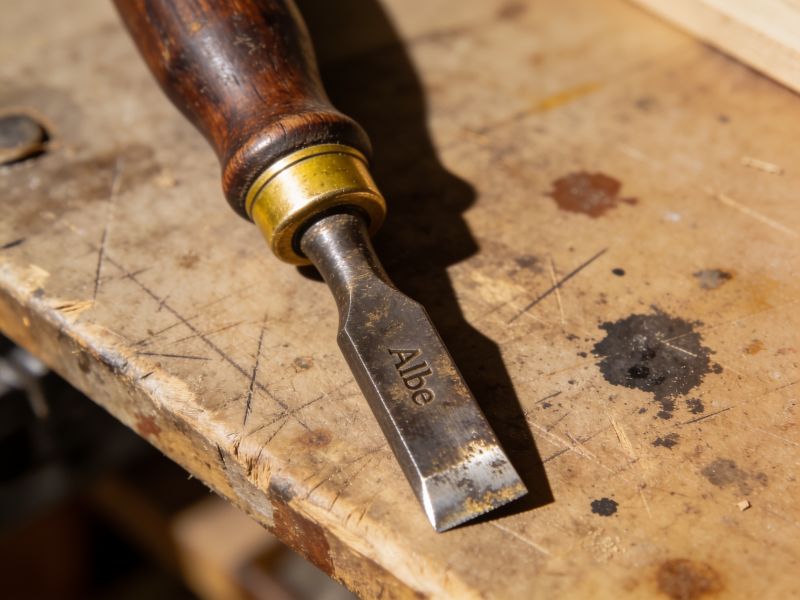
What's interesting is how Albe has grown without diluting its identity. The company still forges its blades in a small facility outside Nagano, Japan。using a two-steel lamination process that hasn't changed much since the 1950s. I asked a distributor why they don't expand production to meet rising demand. He laughed. 'They'd rather sell out than rush the heat treatment.' That kind of constraint sounds quaint until you use an Albe tool for a decade and realize the edge still holds. There's a lesson here for any brand tempted to scale too fast: scarcity, when it's honest, builds trust. Albe doesn't need a loyalty program. Its customers do the marketing for free, showing off their chisels like tattoos.Of course, Albe isn't perfect. The handles—hooped with a thin brass ferrule—can crack if you're careless with a mallet. Replacement parts are annoying to source outside Japan. And the price?A single 3/4-inch bench chisel runs about $85, which makes beginners wince. But those complaints miss the point. Albe tools aren't meant for everyone. They're meant for the person who sharpens on a waterstone every Sunday, who wipes down the blade after each session。who treats the tool as a long-term collaborator rather than a disposable purchase. That narrow focus is a strength. Brands that try to please everyone often end up pleasing no one.Where does Albe go from here?The company recently introduced a line of carving tools aimed at spoon carvers and green woodworkers—a small nod to a growing niche. It's a cautious move, the kind you'd expect from a firm that values consistency over hype. I'd love to see them collaborate with a Western handle maker。
maybe someone in Maine who understands cold-climate ergonomics. But honestly, Albe doesn't need my suggestions. It has done just fine by ignoring trends and trusting its own pace. In a market obsessed with novelty, there's something deeply reassuring about a tool that simply works, year after year, without asking for attention. That's the Albe way. Quiet, deliberate, and built to outlast the conversation.